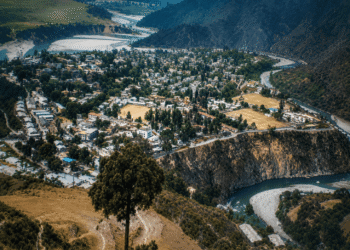

Hidden in the quiet mountains of Jaunsar-Bawar region of Uttarakhand, Lakhamandal is not just a place, it feels like a story frozen in time. Surrounded by forests, hills and the flowing Yamuna river, this small village holds deep history, strong faith and many local legends that still live in people’s hearts.
Where is Lakhamandal?
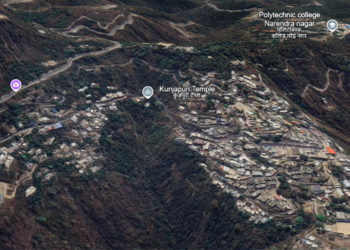
Lakhamandal is located in the Dehradun district of Uttarakhand, around 35 km from Chakrata and about 120+ km from Dehradun. The village lies on the route connecting Mussoorie to Yamunotri, making it both a spiritual and scenic destination.
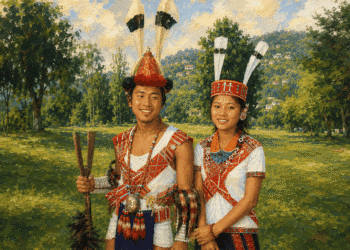
This region is part of Jaunsar-Bawar, a culturally rich tribal belt known for its unique traditions, language (Jaunsari) and simple mountain life.
Meaning behind the name
The name Lakhamandal comes from two words:
- “Lakha” meaning many
- “Mandal” meaning temples or Shivlings
It is believed that once there were hundreds of temples or Shivlings here, which is why the place got this name.
Ancient temple and history
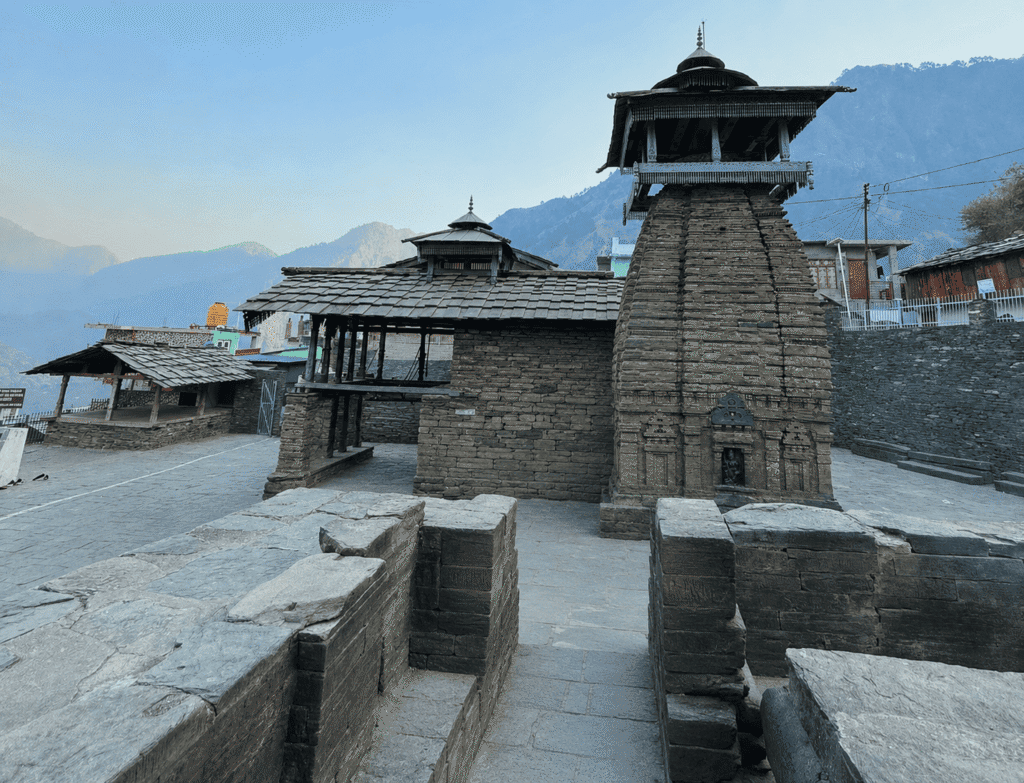
At the heart of Lakhamandal stands an old temple dedicated to Lord Shiva. The present structure is believed to be built around the 12th–13th century, but the site itself is much older. Archaeological findings suggest activity here from as early as the 5th–8th century CE.
A stone inscription from the 6th century tells that a princess named Ishwara built a Shiva temple here in memory of her husband. Many sculptures, broken temple remains and carved stones found around the village show that Lakhamandal was once a large and important religious center.
The mysterious Shivling
One of the most unique things here is the graphite Shivling inside the temple.
When water is poured on it, the surface shines like a mirror and even reflects a person’s image.
Locals believe that this has spiritual meaning, that seeing your reflection here helps in self-realisation and purification.
Connection with Mahabharata
Lakhamandal is strongly linked with the epic Mahabharata. According to local belief, this is the place where:
- Duryodhana built the Lakshagriha (wax palace) to kill the Pandavas
- The Pandavas escaped through a secret cave
That cave is still known today as Dhundhi Odaari, meaning a hidden or misty cave in the local language. Whether myth or history, these stories give Lakhamandal a powerful and mysterious feeling.
Statues and local beliefs
Near the temple, there are two tall stone statues known as Dwarpal (gatekeepers).
Some people believe they represent Bhima and Arjuna, while others say they are mythological guardians like Jai and Vijay.
Such mixed beliefs show how history and faith blend together in this place.
Life around Lakhamandal
Lakhamandal is not crowded like other tourist spots. The village still follows a slow, traditional lifestyle.
- People depend on farming and livestock
- Houses are made of stone and wood
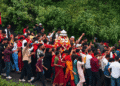
- Culture is deeply rooted in rituals and festivals
This simplicity makes the place feel peaceful and real.
Why Lakhamandal feels special
Lakhamandal is not just about one temple or one story. It is a mix of:
- Ancient history
- Religious faith
- Mahabharata legends
- Natural Himalayan beauty
Here, you don’t just “visit” a place; you experience silence, mystery and a connection with the past.
Final thoughts
If you ever travel through Uttarakhand and want to explore something beyond the usual tourist spots, Lakhamandal is worth a visit. It is simple, quiet and full of stories, some written in stone, and some still living in the minds of local people.
In a world that moves fast, Lakhamandal reminds you to slow down and listen; to history, to nature, and maybe even to yourself.
*The information published on Unseen Uttarakhand is intended solely for educational, informational, and cultural awareness purposes.
Our articles are prepared after researching publicly available sources, including books, historical records, reputable websites, local folklore, oral traditions, and information shared by residents and subject enthusiasts. While we make every effort to ensure the accuracy of our content, some historical accounts, legends, customs, and local beliefs may have multiple versions or interpretations. If you believe any information on this website is inaccurate, outdated, or requires correction, we welcome your feedback and will review it carefully.