
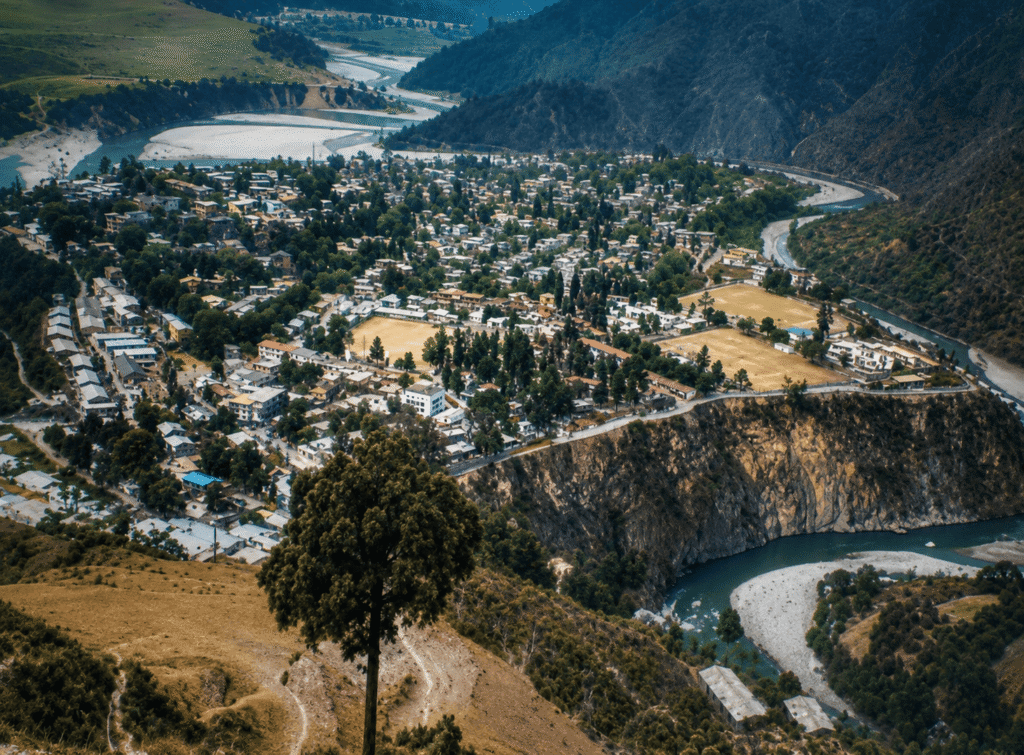
Hidden beneath the calm blue waters of Tehri Lake lies a town that once echoed with the sounds of bustling markets, temple bells, and everyday life. Old Tehri (Purani Tehri) was not merely a town; it was the cultural, historical, and emotional heart of the former Tehri Garhwal Kingdom. Today, while adventure tourists visit Tehri Lake for boating and water sports, few realize that an entire town, along with countless memories, rests beneath its surface.
This is the story of a town that disappeared from the map but continues to live in the hearts of those who once called it home.
The Birth of Old Tehri
Old Tehri stood at the sacred confluence of the Bhagirathi and Bhilangna rivers in present-day Uttarakhand. Before it came to be known as Tehri, the area was often referred to as Ganesh Prayag, owing to its location at the meeting point of the two rivers. The town eventually became the capital of the princely state of Tehri Garhwal and remained its administrative and commercial center for generations.
Its narrow streets, traditional Garhwali houses, temples, schools, and marketplaces reflected a unique blend of Himalayan culture and royal heritage.
A Town Full of Life
Unlike many hill settlements, Old Tehri had a vibrant urban character.
Every morning, traders from nearby villages arrived with fresh vegetables, grains, wool, and handmade goods. Local sweet shops, tea stalls, and traditional bazaars remained lively throughout the day. Festivals such as Baisakhi, Harela, Diwali, and local fairs transformed the town into a colorful celebration of Garhwali traditions.
The town was home to people from different communities who lived together for decades, creating a close-knit social fabric that many former residents still remember with nostalgia.
The Royal Legacy
Old Tehri served as the capital of the Tehri Garhwal Kingdom, ruled by the Shah dynasty. Administrative buildings, royal residences, temples, and educational institutions gave the town a distinct identity.
Its location made it an important center connecting remote Himalayan villages with the plains. Pilgrims travelling towards Gangotri and Yamunotri also passed through the region, making Tehri an important stop on traditional pilgrimage routes.
The Dream of a Giant Dam
The idea of constructing a large hydroelectric dam on the Bhagirathi River emerged during the 1960s. After years of planning, surveys, and political discussions, the Tehri Dam project received approval in the early 1970s. Construction continued over several decades and became one of India’s largest and most debated infrastructure projects.
The dam promised several benefits:
- Hydroelectric power generation
- Drinking water supply for millions
- Irrigation support for northern India
- Flood control
However, these benefits came with a heavy human and cultural cost.
The Submergence of Old Tehri
As the dam reservoir began filling, families gradually left their ancestral homes. Entire neighborhoods were evacuated, and thousands of residents shifted to the newly planned town of New Tehri.
By 2005–2006, Old Tehri had disappeared beneath the rising waters of the reservoir. Houses, temples, schools, markets, and government buildings vanished forever beneath what is now known as Tehri Lake.
For many families, leaving behind homes built over generations was far more painful than relocating to a new settlement.
A Story of Memories and Loss
The disappearance of Old Tehri was not just about buildings, it was about memories.
Residents often recall:
- Childhood games played in narrow lanes
- Local festivals celebrated with neighbors
- Family homes built by grandparents
- Historic temples where generations worshipped
- The famous clock tower that slowly disappeared beneath the rising waters
Even today, many former residents describe Old Tehri not as a place they lost, but as a place they continue to carry within themselves. Personal recollections shared over the years consistently reflect the emotional impact of displacement and the enduring attachment to the submerged town.
The Debate That Never Ended
The Tehri Dam became one of India’s most debated development projects.
Supporters argue that it:
- Generates significant hydroelectric power.
- Supplies drinking water to millions of people.
- Supports irrigation across several northern states.
- Helps in flood moderation.
Critics point to concerns such as:
- Displacement of more than one lakh people.
- Loss of a historic town and cultural heritage.
- Environmental and seismic concerns.
- Rehabilitation challenges faced by affected families.
Both perspectives remain part of the continuing discussion around the project, making Old Tehri a symbol of the difficult balance between development and heritage.
What Lies Beneath Tehri Lake?
Although the town is submerged, changing water levels occasionally reveal traces of the past.
Older residents remember seeing:
- Portions of old buildings
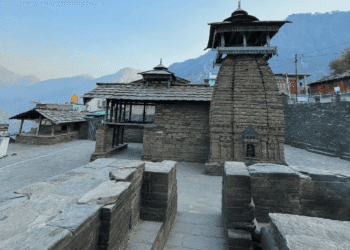
- Temple structures
- The historic clock tower before it was fully submerged
- Roads that once connected neighborhoods
These fleeting glimpses serve as reminders that beneath the tranquil lake rests an entire chapter of Uttarakhand’s history.
New Tehri: A Planned Beginning
To rehabilitate displaced residents, the government developed New Tehri, located on higher ground around 24 kilometers away.
Today, New Tehri serves as the district headquarters and offers panoramic views of the reservoir. While it provides modern infrastructure, many former residents believe that no planned township can truly replace the emotional connection they had with Old Tehri.
Tehri Lake Today
Ironically, the waters that submerged Old Tehri have also transformed the region into one of Uttarakhand’s leading adventure tourism destinations.
Visitors now come for:
- Jet skiing
- Kayaking
- Boating
- Parasailing
- Camping
- Scenic lake cruises
Few tourists realize that beneath the shimmering surface lies a town that once bustled with everyday life.
Preserving a Vanished Heritage
Although Old Tehri no longer exists physically, its legacy survives through photographs, oral histories, family memories, and the stories passed down by those who once lived there.
For Uttarakhand, Old Tehri represents more than a submerged town. It stands as a reminder that progress often comes with profound human stories; stories of sacrifice, resilience, and remembrance.
As long as these stories are told, Old Tehri will never truly disappear.
Conclusion
Old Tehri is one of the most poignant chapters in the history of Uttarakhand. Once the proud capital of the Tehri Garhwal Kingdom, it now rests silently beneath the waters of Tehri Lake. While the dam brought electricity, irrigation, and development to millions, it also erased a town rich in history, culture, and human memories. Today, whenever the waters of Tehri Lake shimmer under the Himalayan sky, they conceal not just streets and buildings, but the legacy of an entire community whose spirit continues to inspire generations.