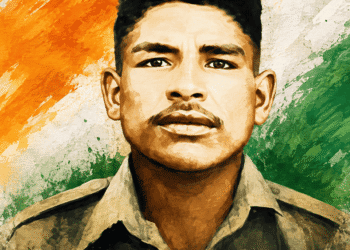

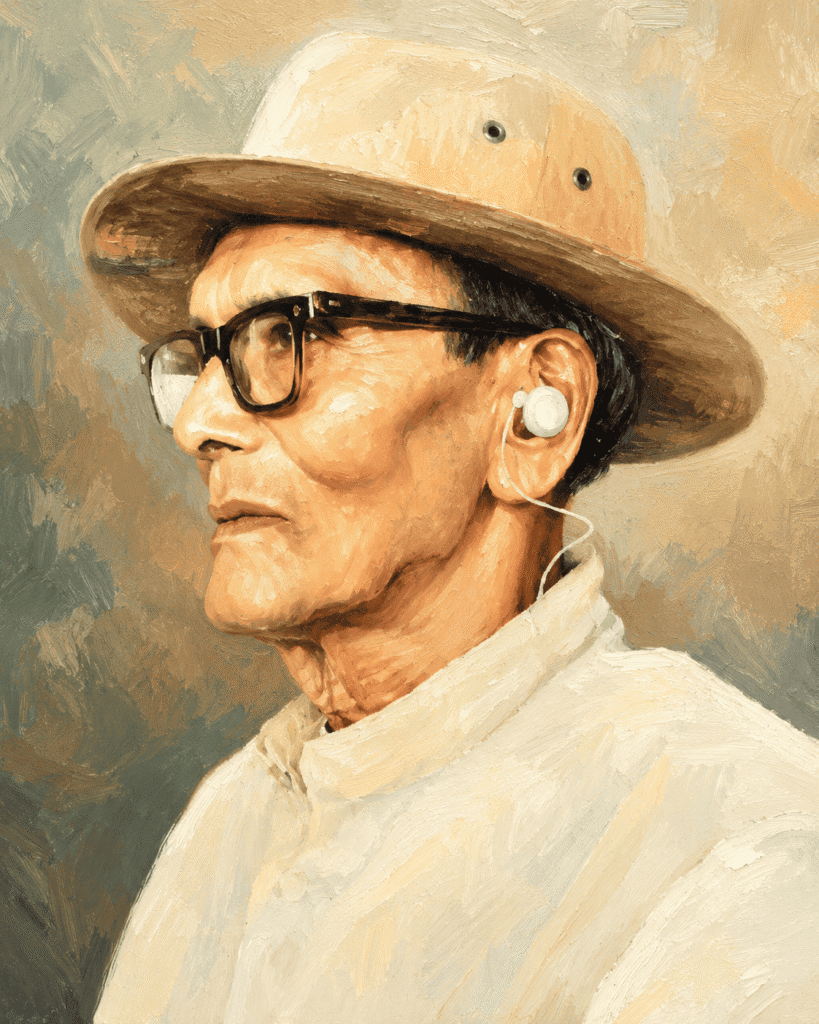
History often remembers kings, leaders, and revolutionaries; but sometimes, the bravest acts come from those who simply refuse to do what is wrong. Veer Chandra Singh Garhwali was one such man. A soldier in the British Indian Army, he became a symbol of courage not because he fought with weapons, but because he chose not to use them when it mattered the most.
Early Life: Roots in the Hills
Chandra Singh Garhwali was born on 25 December 1891 in a small village in the Garhwal region of present-day Uttarakhand. Growing up in the mountains, he was shaped by simplicity, resilience, and a strong sense of community. Like many young men of his time, he joined the British Indian Army in 1914, hoping for stability and purpose.
During World War I, he served in different regions, including France and the Middle East. These experiences exposed him to the harsh realities of war and discipline, but also planted the seeds of deeper thinking about justice, power, and humanity.
A Soldier Influenced by Ideas
While still in service, Garhwali came into contact with nationalist ideas and leaders like Mahatma Gandhi. He was deeply influenced by Gandhian principles of non-violence and truth.
At the same time, he was associated with reformist movements like the Arya Samaj, which emphasized social equality and reform. These influences quietly transformed him, not into a rebel, but into a man guided by conscience.
The Turning Point: Peshawar, 1930
The defining moment of his life came on 23 April 1930 in Peshawar, during the freedom movement. Thousands of unarmed protestors had gathered as part of a non-violent protest led by Khan Abdul Ghaffar Khan. The British authorities ordered troops, including Garhwali’s unit of the Royal Garhwal Rifles, to control the crowd.
Then came the command: open fire.
In that tense moment, Chandra Singh Garhwali did something extraordinary. Instead of obeying the order, he countered it with a command of his own; telling his fellow soldiers to cease fire. The rifles were lowered. The bullets were never fired. This single decision prevented what could have been another massacre like Jallianwala Bagh.
The Price of Courage
Such defiance did not come without consequences. Garhwali and many of his fellow soldiers were arrested, court-martialed, and sentenced to long terms of imprisonment. His property was confiscated, and he spent around 11 years in jail.
Even after his release in 1941, restrictions were placed on his movement, and he continued to face hardships. Yet, he did not step away from the freedom struggle. He later participated in the Quit India Movement and was imprisoned again.
Life After Independence
After India gained independence, Garhwali continued to work for social justice. He spoke against inequality, caste discrimination, and exploitation. He believed in a society where dignity and equality were not privileges but rights. He also entered politics for a brief period, but electoral success was never his goal. His real identity remained that of a people’s hero; a man who stood for what was right, even when it cost him everything.
Legacy: More Than a Freedom Fighter
Veer Chandra Singh Garhwali passed away on 1 October 1979, but his legacy continues to inspire generations. He is remembered not just as a freedom fighter, but as a moral force in India’s history. His act in Peshawar is often seen as one of the finest examples of humanity triumphing over blind obedience.
Institutions, universities, and memorials in Uttarakhand today carry his name, reminding people of a simple yet powerful truth: courage is not always about fighting; it is sometimes about refusing to fight.
Conclusion
In a world where orders are often followed without question, Veer Chandra Singh Garhwali’s story stands apart. He reminds us that true bravery lies in listening to one’s conscience. On that day in Peshawar, he chose humanity over authority, compassion over command, and truth over fear. And in doing so, he didn’t just save lives, he carved his name into the soul of India’s freedom struggle.