
Hidden in the fertile plains of Uttarakhand’s Terai and Bhabar belt lives a community that rarely finds space in mainstream narratives. The Buksa tribe, also known as Bhoksa, represents one of the oldest indigenous groups of the region. Their life is not defined by grand monuments or written histories, but by oral traditions, agricultural rhythms, and a deep connection with the land they inhabit.
Recognised as a Scheduled Tribe in India, the Buksa people continue to preserve their distinct identity while navigating the pressures of modern change.
Where the Buksa Call Home
The Buksa tribe is primarily settled in the southern and south western parts of Uttarakhand. Their presence is strongest in districts like Udham Singh Nagar, Nainital, Dehradun, Haridwar, and parts of Pauri Garhwal.
These regions form the Terai and Bhabar zones, areas known for dense forests, fertile soil, and abundant water. Life here has shaped the Buksa way of living for generations.
Their settlements are often small village clusters, sometimes referred to as kheras, where community bonds remain strong and decisions are guided by elders.
Origins and Identity
The exact origin of the Buksa tribe is still debated among historians and anthropologists. Some oral traditions suggest migration from central or northern India, while others link their identity to early Indo Aryan settlers.
Even the name Buksa has multiple interpretations. One belief connects it to forest dwelling communities, while another associates it with physical traits or local legends.
What remains certain is that the Buksa have developed a unique cultural identity over centuries, distinct from other tribes of Uttarakhand.
Language and Oral Traditions
The Buksa people speak the Buksa language, an Indo Aryan language related to regional dialects of North India.
Unlike many mainstream languages, Buksa has no significant written literature. Instead, knowledge is preserved through oral storytelling, folk songs, and community memory. These stories often revolve around nature, ancestors, and everyday life.
Social Structure and Community Life
Buksa society is traditionally organised around clans and kinship groups. Marriage usually takes place within the community, and social norms are guided by long standing customs.
The family system is largely patriarchal, though both nuclear and extended families exist. Rituals surrounding marriage, birth, and death continue to follow traditional patterns, often accompanied by songs and communal gatherings.
Village councils or informal leadership structures play an important role in resolving disputes and maintaining harmony.
Faith and Beliefs
Religion among the Buksa is a blend of Hindu practices and indigenous beliefs. They worship major Hindu deities while also honouring local spirits, ancestors, and nature forces.
Festivals like Holi, Diwali, and Dussehra are celebrated, but often with unique rituals that reflect their tribal identity. Agricultural cycles and seasonal changes also influence many of their ceremonies.
Traditional healing practices are still present, where elders use herbs and natural remedies to treat illnesses.
Livelihood and Daily Life
Agriculture forms the backbone of the Buksa economy. Most families depend on farming, growing crops such as rice, wheat, and pulses.
Alongside farming, they collect forest produce like honey, firewood, and medicinal plants. Animal husbandry and occasional wage labour also contribute to their income.
Their lifestyle reflects a close relationship with nature. The forests are not just a resource but a part of their identity.
Culture, Music, and Expression
Music and dance are central to Buksa cultural life. During festivals and social gatherings, traditional songs are performed with instruments like dhol and mandal.
Their art is simple yet expressive, often inspired by daily life and natural surroundings. Bamboo work and basket weaving are also practiced in some areas, reflecting both creativity and utility.
Challenges in the Modern World
Despite their rich cultural heritage, the Buksa community faces several challenges. Limited access to education, economic opportunities, and healthcare has contributed to social and economic marginalisation.
Over time, many young people have started moving towards towns and cities in search of better opportunities. While this brings change and exposure, it also creates a gap between generations and traditions.
A Community in Transition
The story of the Buksa tribe today is one of transition. They stand at a point where tradition meets modernity. Efforts by government and social organisations aim to improve their living conditions while preserving their cultural identity.
Yet, the real strength of the Buksa people lies in their resilience. Their ability to adapt without losing their roots continues to define who they are.
Conclusion
The Buksa tribe is not just a community of the past. It is a living, evolving culture that carries centuries of wisdom, resilience, and harmony with nature.
To understand Uttarakhand beyond its popular hill stations and temples, one must look at communities like the Buksa. Their story reminds us that heritage is not only found in monuments, but in people, in their lives, and in the quiet continuity of their traditions.
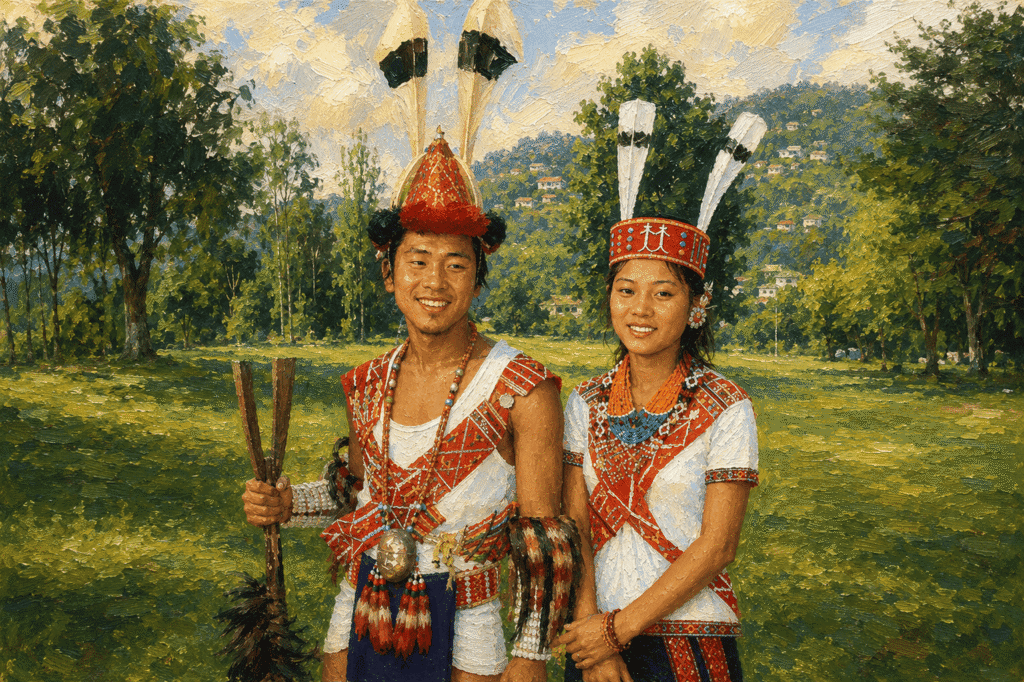
* The information presented in this blog is based on research from publicly available sources on the internet. While every effort has been made to ensure accuracy, there may be unintentional errors or omissions. If you find any incorrect information, please feel free to point it out so it can be corrected. The image used in this blog are for representation purposes only.