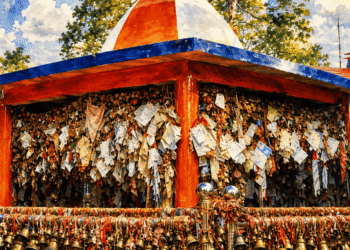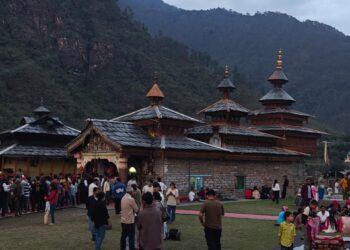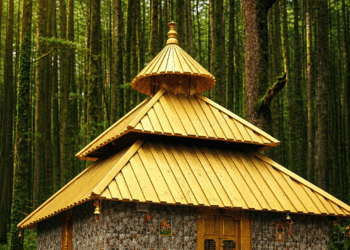

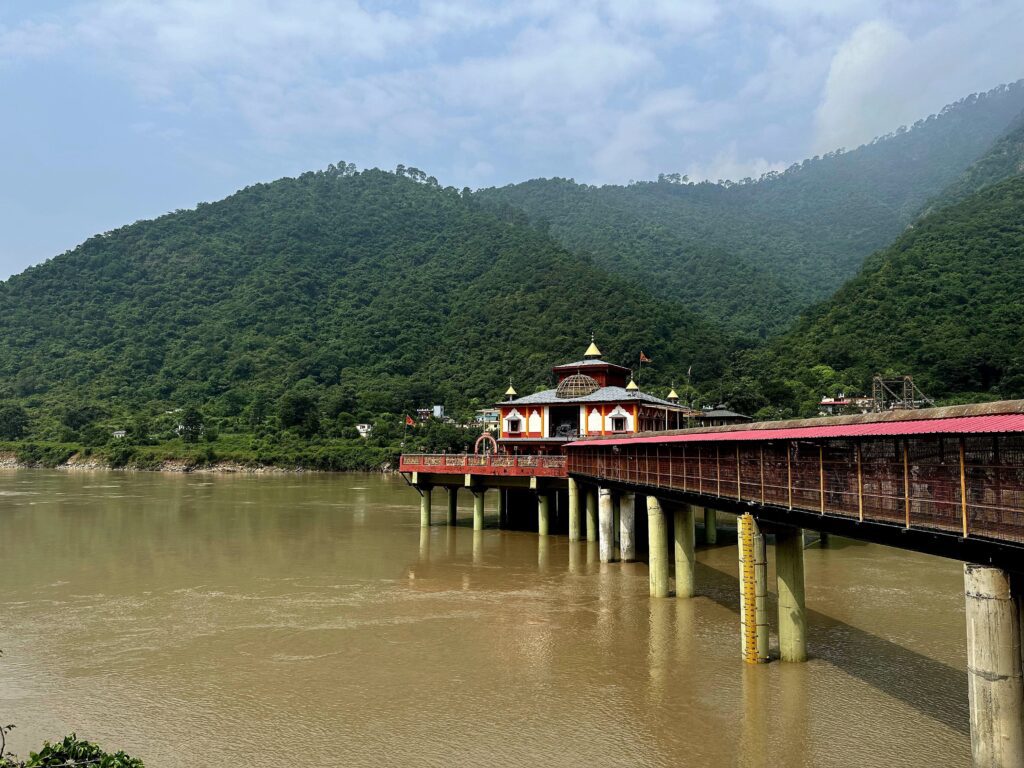
There are places in Uttarakhand where faith feels deeply connected with the landscape. Dhari Devi Temple is one of them. Perched beside the Alaknanda River in the Garhwal Himalayas, the shrine is revered as a powerful manifestation of Goddess Kali and is widely regarded by devotees as a guardian deity of Uttarakhand.
The temple is not simply a place where pilgrims stop to offer prayers. Its story brings together mythology, local tradition, river worship, modern development, environmental concerns and one of the most debated episodes in Uttarakhand’s recent religious history.
Located near Srinagar on the road towards Rudraprayag and Badrinath, the temple attracts pilgrims travelling through the Alaknanda valley. The Uttarakhand government describes Dhari Devi as a much worshipped goddess of the region, while government material also identifies her with the fierce aspect of Shakti and describes the shrine as a protective presence along the Char Dham pilgrimage route.
Who Is Dhari Devi?
Dhari Devi is traditionally worshipped as a form of Goddess Kali. What makes the shrine particularly distinctive is the belief that the upper portion of the goddess is worshipped at Dhari Devi, while the lower portion is associated with the temple at Kalimath, where the goddess is worshipped as Kali.
According to local religious tradition, the goddess is believed to have a changing appearance during the course of the day. Devotees describe the image as resembling a young girl in the morning, a woman during the day and an elderly woman later in the day. This belief is part of the temple’s living religious tradition rather than something that can be established through scientific measurement. For generations, local people have regarded Dhari Devi as a protective presence over the surrounding mountains and pilgrimage routes. The idea of the goddess as a guardian is especially important in Garhwal, where rivers, mountains and sacred sites are closely woven into religious life.
The Legend of Dhari Devi
The most widely told legend begins with a devastating flood. According to the traditional account recorded by the Pauri Garhwal district administration, floodwaters once carried away a temple and the image of the goddess. The image eventually became trapped against a rock near the village of Dharo.
Villagers are said to have heard what they believed was the cry of the divine image. A sacred voice then instructed them to establish the goddess at that location. The shrine that developed there became known as Dhari Devi Temple. This story helps explain why the location itself is considered sacred. The deity is not regarded merely as an image placed inside a building. The rock, river and shrine together form part of the sacred landscape. That distinction becomes important when understanding the controversy surrounding the temple’s relocation in 2013.
Why Is Dhari Devi Considered Important?
Dhari Devi holds a special place in the religious culture of Uttarakhand. The goddess is associated with Kali and with the protective power of Shakti. Pilgrims travelling towards important Himalayan shrines often stop at Dhari Devi before continuing deeper into the mountains. Government material describes the goddess as a guardian deity of Uttarakhand and connects the shrine with the protection of the Char Dham pilgrimage route.
The temple also reflects an important feature of Himalayan Hinduism. Sacred geography is not limited to famous temples. Rivers, springs, rocks, caves and mountain passes can all become part of a religious landscape through generations of worship and oral tradition. Near Dhari Devi, the Alaknanda is not simply scenery. It is part of the identity of the shrine.
The Alaknanda River and the Temple
The temple stands beside the Alaknanda, one of the principal rivers of the Himalayan region and one of the major headwaters of the Ganga system. The setting is significant because the river has shaped both the physical and spiritual character of the area. Pilgrims travelling through the valley encounter a landscape in which water and worship are closely connected. The district administration notes that the temple can be reached from the main road through a roughly one kilometre cement pathway leading towards the shrine beside the Alaknanda. It also records the presence of an ancient cave near the temple.
The 2013 Relocation Controversy
The most discussed chapter in the modern history of Dhari Devi began with the construction of the 330 megawatt Srinagar Hydro Electric Project.
The original temple stood in an area that would be affected by the project’s reservoir. Engineers, government bodies, temple representatives and other stakeholders considered different ways of protecting the shrine. Documents examined during proceedings before the Supreme Court show that several alternatives were studied. These included protecting the existing site with a surrounding structure, constructing a protective enclosure, relocating the temple and raising the temple above the highest flood level while retaining it at the same general location.
The issue was not merely an engineering problem. For devotees and temple authorities, the original location was itself sacred. Moving a deity from its traditional seat could therefore be understood as a religious matter rather than simply a construction exercise. The Supreme Court record shows that a committee ultimately recommended raising the temple above the highest flood level and installing the idol at a higher elevation at the same location, with access provided by a pedestrian bridge.
What Happened on 16 June 2013?
The relocation became particularly controversial because it took place during a period of exceptionally heavy rainfall in Uttarakhand.
Contemporary reports state that the idol was moved on 16 June 2013 as water levels around the shrine were rising. Reports from the period differ in some details concerning the exact timing and circumstances of the relocation, but they agree that the idol was moved from its original position as the region was experiencing severe weather and flooding. The following days brought catastrophic flooding and landslides across Uttarakhand. The disaster caused enormous loss of life and property, particularly in the Kedarnath region and other parts of the Himalayan state.
For many devotees, the timing was deeply significant. A belief soon became widespread that moving Dhari Devi from her original seat had angered the goddess and that the subsequent disaster was a divine consequence.
This is an important part of the temple’s modern story, but it should be described accurately. There is no scientific evidence establishing that the relocation of the idol caused the 2013 floods. The floods were associated with extreme rainfall, cloudburst events, rapid water movement and landslides in a highly fragile Himalayan environment. A Supreme Court record discussing the 2013 disaster also referred to exceptionally heavy rainfall and environmental and disaster management concerns in the region. The belief nevertheless remains powerful because religious traditions are shaped not only by scientific explanations but also by collective memory, experience and faith.
Was the Idol Actually Lost?
The events surrounding the relocation became even more dramatic when reports emerged that the idol had disappeared. Contemporary reporting stated that the idol had been moved to an elevated platform and that problems developed with the structure. The idol was subsequently taken to a temporary location. It was found a few days later in a makeshift room near the proposed new temple site. The episode added to the controversy surrounding the relocation and intensified public concern about the treatment of the shrine.
For devotees, the entire sequence was emotionally charged because the physical movement of the idol was understood in religious terms. For authorities and project officials, it was part of the difficult process of protecting a religious site affected by a major infrastructure project.
The Temple Today
The shrine that visitors see today represents the continuation of an old religious tradition in a changed physical setting. The temple remains an important stop for pilgrims travelling through the Alaknanda valley. The surrounding landscape, the river and the mountain setting continue to give the shrine a distinctive character.
The Pauri Garhwal district administration states that the temple is about 15 kilometres from Srinagar and is approached from the national highway towards Badrinath. Visitors should remember that Dhari Devi is an active place of worship rather than simply a tourist attraction. Local customs and temple instructions deserve the same respect that visitors would show at any important religious shrine.
Dhari Devi and the 2013 Uttarakhand Disaster
Perhaps no other aspect of Dhari Devi’s modern identity has attracted as much attention as the connection people draw between the goddess and the 2013 floods. It is tempting to present the story as a simple cause and effect narrative. The idol was moved, and the floods followed. Therefore, the goddess caused the disaster. But history is more complicated.
The 2013 Uttarakhand disaster occurred amid extreme meteorological and geographical conditions. Scientific and official discussions have examined intense rainfall, cloudbursts, landslides, fragile mountain terrain, river dynamics and the wider impact of development in Himalayan river valleys. At the same time, dismissing the religious interpretation entirely would also miss something important. For local communities, the story expresses a cultural understanding of the relationship between humans, sacred places and nature. Dhari Devi therefore sits at an unusual intersection between faith and environmental history. The story of the temple cannot be fully understood by looking at only one of those dimensions.
A Shrine Where Myth and History Meet
One of the most fascinating things about Dhari Devi is the way different kinds of history exist together. There is the sacred history preserved through oral traditions. There is the physical history of a shrine beside a Himalayan river. There is the administrative history recorded in government documents and court proceedings. There is the environmental history of the Alaknanda valley.And there is the personal history carried by pilgrims who have visited the temple for generations.
These histories do not always tell the same story. That does not make one automatically meaningless. Instead, it shows why places of worship can be much more than monuments. Dhari Devi continues to live through the people who pray there, the priests who maintain its rituals and the pilgrims who pause beside the Alaknanda before continuing towards the higher Himalayas.
When Is the Best Time to Visit Dhari Devi?
For travellers, the most comfortable periods generally depend on weather and road conditions in the Garhwal Himalayas. The summer months can offer relatively accessible travel, while the post monsoon period is often attractive for mountain journeys. However, Himalayan weather can change quickly, and road conditions can be affected by rainfall, landslides or other local disruptions.
Anyone planning a visit should check current local conditions before travelling rather than relying solely on a general seasonal recommendation. The temple’s location beside a major river also makes it especially important to follow local safety instructions during periods of heavy rain.
How to Reach Dhari Devi Temple
Dhari Devi is situated on the road connecting Srinagar with Rudraprayag and the wider Badrinath route. According to the Pauri Garhwal district administration, the temple is approximately 15 kilometres from Srinagar. From the main road, visitors follow a pathway towards the shrine. Srinagar and Rudraprayag are useful reference points for travellers approaching the temple by road. Visitors coming from farther away can generally plan their journey through major Uttarakhand transport hubs before continuing into the Garhwal region. Because mountain travel is affected by weather, road work and occasional landslides, checking current road conditions before setting out is sensible.
What Makes Dhari Devi Different?
Many Himalayan temples are celebrated for their architecture, antiquity or association with major pilgrimage traditions. Dhari Devi is memorable for something slightly different. Its identity is inseparable from its setting.
The goddess stands beside a powerful Himalayan river. Local mythology explains the sacred location through a story of flood and divine intervention. Generations of devotees have associated the goddess with protection. Then, in modern times, the shrine became part of a major debate about hydropower, environmental risk, religious rights and the preservation of sacred places. That combination makes Dhari Devi more than a stop on a pilgrimage route. It is a place where the old and the modern meet.
Final Thoughts
Dhari Devi Temple is best understood through several perspectives at once. For devotees, she is a powerful form of the goddess and a guardian of the land. For pilgrims, the shrine is a sacred halt on the journey through Garhwal. For historians, the temple offers an example of how religious traditions survive through changing political and physical landscapes. For environmental observers, its story raises difficult questions about development in fragile Himalayan river valleys. And for travellers, Dhari Devi offers an opportunity to experience a place where the river, mountains, mythology and living faith remain closely connected.
The story of Dhari Devi also reminds us to distinguish between faith and established fact without treating either casually. The belief that the goddess caused the 2013 disaster belongs to the religious interpretation of the event. The occurrence of extreme rainfall, flooding and landslides belongs to the historical and scientific record. Both aspects are essential to understanding why Dhari Devi has become such a powerful symbol in Uttarakhand. Perhaps that is the enduring appeal of the shrine.
Beside the flowing Alaknanda, Dhari Devi continues to represent a relationship between people and place that has survived floods, infrastructure projects, controversy and profound change. And for countless pilgrims entering the Garhwal Himalayas, a visit to the goddess remains not merely a sightseeing stop, but a moment to pause, pray and acknowledge the sacred landscape around them.