
Hidden deep in the eastern Kumaon region of Uttarakhand, Darma Valley is one of the least explored yet culturally rich Himalayan regions in India. Located in the Pithoragarh district near the borders of Nepal and Tibet, this valley offers far more than scenic beauty. It represents a rare balance between nature, tradition, and human survival in extreme mountain conditions.
Geography and natural setting
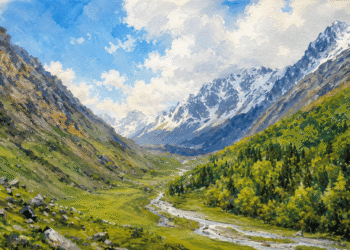
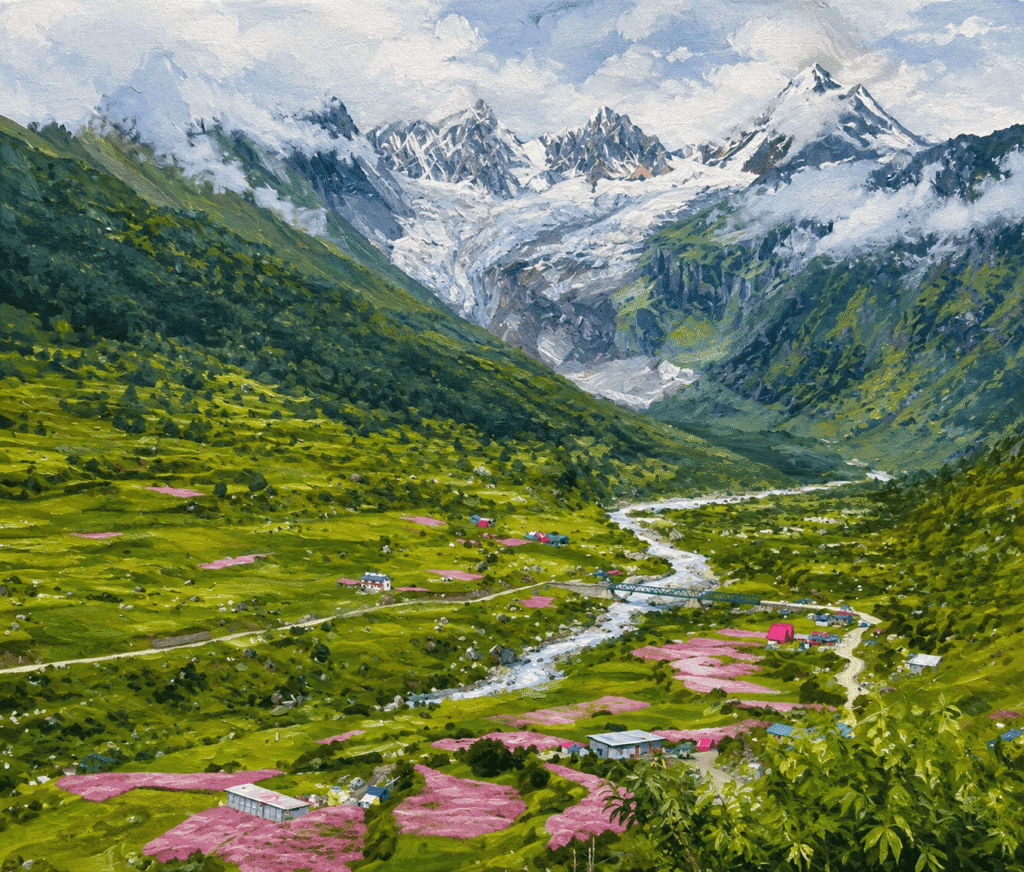
Darma Valley stretches along the course of the Darma River and lies at an altitude ranging roughly from 2000 meters to over 4500 meters above sea level. This wide variation in elevation creates multiple ecological zones within a relatively small region.
The lower parts of the valley are covered with dense forests of oak, pine, and rhododendron. As one moves higher, the landscape gradually transforms into alpine meadows and eventually into cold desert like terrain near the glaciers. Towering above the valley are the Panchachuli peaks, a group of five हिमालयन summits that dominate the skyline and are considered among the most striking mountain formations in Kumaon.
Historical importance and trade connections
Historically, Darma Valley was not isolated. It was part of an active trans Himalayan trade network that connected India with Tibet. The indigenous Rang or Shauka community played a central role in this exchange.
They traded goods such as salt, wool, and borax from Tibet in return for grains, spices, and other essentials from the Indian plains. This seasonal trade shaped not only the economy but also the lifestyle of the people. Families practiced transhumance, moving between high altitude villages in summer and lower regions during winter months.
Local folklore adds another layer to the valley’s identity. According to popular belief, the Panchachuli peaks are associated with the Pandavas from the Mahabharata, who are said to have cooked their last meal here before beginning their final journey toward the heavens.
Life and culture in the valley
Life in Darma Valley remains closely tied to nature. The population is sparse, with small villages such as Duktu, Dantu, and Sela forming the core settlements.
Agriculture and animal husbandry are the primary occupations. Crops like barley, buckwheat, potatoes, and rajma are commonly grown, adapted to the short growing season and harsh climate. During winters, when agricultural activity slows down, locals engage in weaving woolen products such as shawls and blankets.
Culturally, the valley reflects a blend of Indian and Tibetan influences. This can be seen in traditional clothing, food habits, and even in architectural styles where stone houses are built to withstand extreme weather.
Biodiversity and ecological value
Darma Valley is ecologically significant due to its rich biodiversity. The region hosts a wide range of plant species, including many medicinal herbs that are valuable both locally and commercially.
The fauna of the valley includes several rare and endangered species. Snow leopards, Himalayan musk deer, and blue sheep are known to inhabit the higher reaches, although sightings are rare. The presence of such species highlights the importance of conserving this fragile ecosystem.
Tourism and present day reality
Unlike popular hill stations in Uttarakhand, Darma Valley remains largely untouched by mass tourism. There are limited accommodation options, minimal connectivity, and almost no large scale commercial infrastructure.
Access to the valley is regulated due to its proximity to international borders, and visitors require permits to travel beyond certain points. The best time to visit is during the summer months when the weather is relatively stable and villages are inhabited.
This limited accessibility has helped preserve the valley’s original character, but it also means that tourism development must be handled carefully to avoid ecological damage.
Conclusion
Darma Valley is not just a destination, it is a living example of how human life can adapt to and coexist with one of the harshest environments on Earth. It offers a glimpse into a slower, more grounded way of life that is rapidly disappearing in other parts of the Himalayas.
For those seeking authenticity over convenience and silence over crowds, Darma Valley stands as one of Uttarakhand’s most remarkable and meaningful landscapes.