
By the time you return from Har Ki Dun, you don’t just carry photographs, you carry the silence of the Himalayas.
Most Himalayan treks are remembered for their towering peaks or challenging climbs. Har Ki Dun is remembered for something far more difficult to describe. It is one of those rare valleys where nature, mythology, history, and mountain life continue to exist in remarkable harmony.
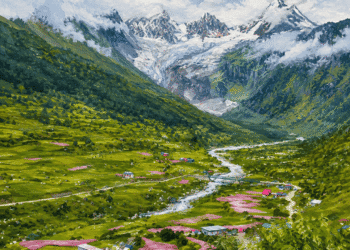
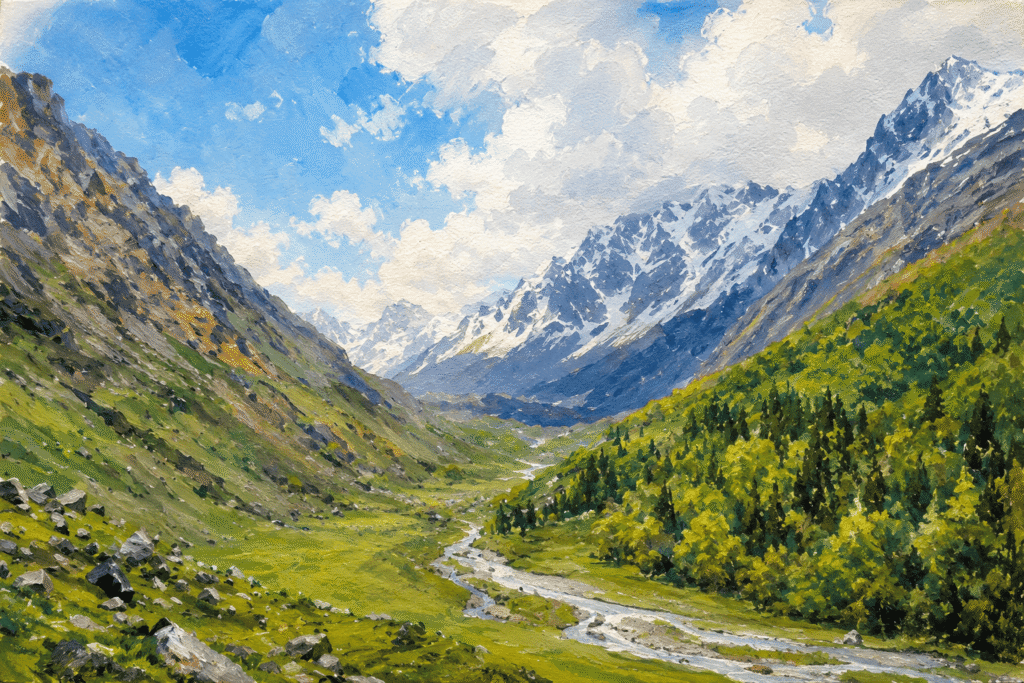
Hidden deep inside the Garhwal Himalayas of Uttarakhand, Har Ki Dun is often called the “Valley of Gods.” Unlike commercial trekking routes crowded with tourists, this trail still preserves the feeling of walking into an untouched Himalayan world. Ancient wooden villages, centuries-old traditions, dense forests, glacial rivers, and panoramic snow-covered peaks combine to create an experience that feels less like a trek and more like a journey through time.
Where is Har Ki Dun?
Har Ki Dun lies in the Uttarkashi district of Uttarakhand, inside the Govind Pashu Vihar National Park and Wildlife Sanctuary. The hanging valley sits at an altitude of approximately 3,566 metres (11,700 feet) above sea level and is surrounded by some of the most spectacular Himalayan peaks, including Swargarohini, Black Peak (Kala Nag), Bandarpoonch, and Hata Peak. The valley is connected to Himachal Pradesh through the high-altitude Borasu Pass, an ancient trans-Himalayan route once used by shepherds and traders.
Why is Har Ki Dun Called the Valley of Gods?
The name carries deep mythological significance.
According to local belief, the Pandavas are said to have travelled through this valley on their final journey toward heaven, known as the Mahaprasthan. The majestic Swargarohini Peak, visible from sections of the trek, is traditionally associated with the mythical stairway to heaven. Whether one believes the legend or not, standing beneath the towering mountains while listening to the rushing Supin River makes it easy to understand why generations have regarded this landscape as sacred.
A Trek Through Living Himalayan Villages
One of Har Ki Dun’s greatest treasures isn’t the scenery, it’s the people. Unlike many Himalayan trekking routes that pass through abandoned settlements, Har Ki Dun takes visitors through villages where traditional mountain life continues much as it has for centuries.
Osla
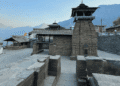
Perhaps the most famous village on the route, Osla is known for its intricately carved wooden houses, slate roofs, and unique temple architecture. Narrow stone pathways weave through homes decorated with traditional Himalayan woodwork. The village is also known for preserving folklore that differs from mainstream interpretations of the Mahabharata, reflecting the region’s rich cultural identity.
Gangad
Smaller and quieter than Osla, Gangad offers an authentic glimpse into everyday Himalayan life, where agriculture, livestock, and community traditions remain central to survival. Walking through these villages feels less like visiting a tourist destination and more like being welcomed into a living museum of Himalayan culture.
Forests That Constantly Change
The trail never looks the same for long. The lower sections pass through dense forests of:
- Deodar Cedar
- Blue Pine
- Oak
- Walnut
- Maple
- Rhododendron
As altitude increases, these forests gradually open into alpine meadows, rocky slopes, and glacial landscapes. Spring transforms the trail into a colourful paradise as rhododendrons bloom across the mountainsides, while autumn paints the forests in shades of gold and amber. During winter, heavy snowfall turns the valley into a white wilderness.
A Paradise for Wildlife Enthusiasts
Har Ki Dun lies within one of the richest biodiversity zones in the Western Himalayas. Although many of its most elusive inhabitants remain hidden, the sanctuary supports remarkable wildlife, including:
- Snow Leopard
- Himalayan Black Bear
- Himalayan Tahr
- Musk Deer
- Bharal (Blue Sheep)
- Serow
- Wild Boar
Bird lovers may spot:
- Himalayan Monal (State Bird of Uttarakhand)
- Golden Eagle
- Bearded Vulture
- Cheer Pheasant
- Himalayan Snowcock
- Western Tragopan
The sanctuary spans nearly 958 square kilometres, protecting ecosystems that range from temperate forests to alpine meadows.
Rivers, Waterfalls and Meadows
One of the reasons Har Ki Dun remains memorable is the constant presence of water. The trail follows the crystal-clear Supin River, crossing wooden bridges, glacier-fed streams, waterfalls, and lush meadows. Popular camping locations like Seema, Kalkatiyadhar, and Har Ki Dun Valley offer spectacular views where mornings begin with sunlight slowly illuminating the surrounding snow peaks. Unlike many Himalayan treks dominated by steep climbs, Har Ki Dun offers long stretches of relatively gentle walking through forests and riverside trails, making every day visually rewarding.
Best Time to Visit
Spring (March–April)
- Snow remains at higher elevations.
- Rhododendrons begin blooming.
- Pleasant daytime temperatures.
Summer (May–June)
- Green valleys.
- Comfortable trekking weather.
- Clear mountain views.
Autumn (September–November)
- Crystal-clear skies.
- Golden forests.
- Excellent visibility for photography.
Winter (December–February)
- Heavy snowfall.
- Snow-covered forests and villages.
- Suitable mainly for experienced trekkers and organised expeditions.
The monsoon season is generally avoided because of slippery trails and landslide risks in the approach roads.
Trek Overview
| Feature | Details |
|---|---|
| State | Uttarakhand |
| District | Uttarkashi |
| Base Village | Sankri |
| Trek Start | Taluka |
| Maximum Altitude | Approx. 3,566 m |
| Trek Distance | Around 45–50 km (round trip) |
| Duration | 6–7 Days |
| Difficulty | Easy to Moderate |
| Best Season | March–June & September–November |
Responsible Trekking Matters
Har Ki Dun remains beautiful largely because it has escaped excessive commercialisation.
Visitors can help preserve the valley by:
- Carrying reusable water bottles.
- Avoiding single-use plastics.
- Respecting local customs and village traditions.
- Staying on designated trails.
- Carrying back all non-biodegradable waste.
- Avoiding loud music in camps and forests.
The mountains reward those who travel gently.
More Than Just a Trek
Many Himalayan trails impress with dramatic landscapes. Har Ki Dun does something deeper.
It introduces you to villages where traditional wooden homes still stand against harsh winters, forests that have witnessed generations of shepherds, rivers flowing straight from Himalayan glaciers, and mountain peaks that continue to inspire ancient legends. There are no grand monuments here, no bustling markets, and no luxury resorts. Yet, every bend in the trail tells a story; through the whisper of deodar forests, the echo of distant waterfalls, and the warmth of the people who call these mountains home.
Har Ki Dun is not merely a destination on a trekking map. It is a reminder that some of the world’s greatest journeys are measured not by distance, but by the memories they leave behind.