
High in the Garhwal Himalaya of Uttarakhand, one of India’s longest and most spiritually intense pilgrimages unfolds once in about twelve years. The Nanda Devi Raj Jaat is not just a religious journey. It is a living tradition that connects mythology, geography, and community memory across centuries. Often called the Himalayan Mahakumbh, this yatra stretches for around 280 kilometers through remote valleys, alpine meadows, and high mountain passes, ending near the sacred Homal Kund.
The Divine Story Behind the Yatra
At the heart of the Raj Jaat is Goddess Nanda Devi, revered as a form of Parvati. In local belief, Nanda Devi is the daughter of the mountains and the protector of the region. The yatra symbolizes her farewell journey from her maternal home to the abode of her husband, Shiva.
Villages across Garhwal treat her as their own daughter. This emotional connection is what makes the Raj Jaat deeply personal for the people. It is not just devotion. It is a cultural expression of love, separation, and respect.
The Journey and Its Route
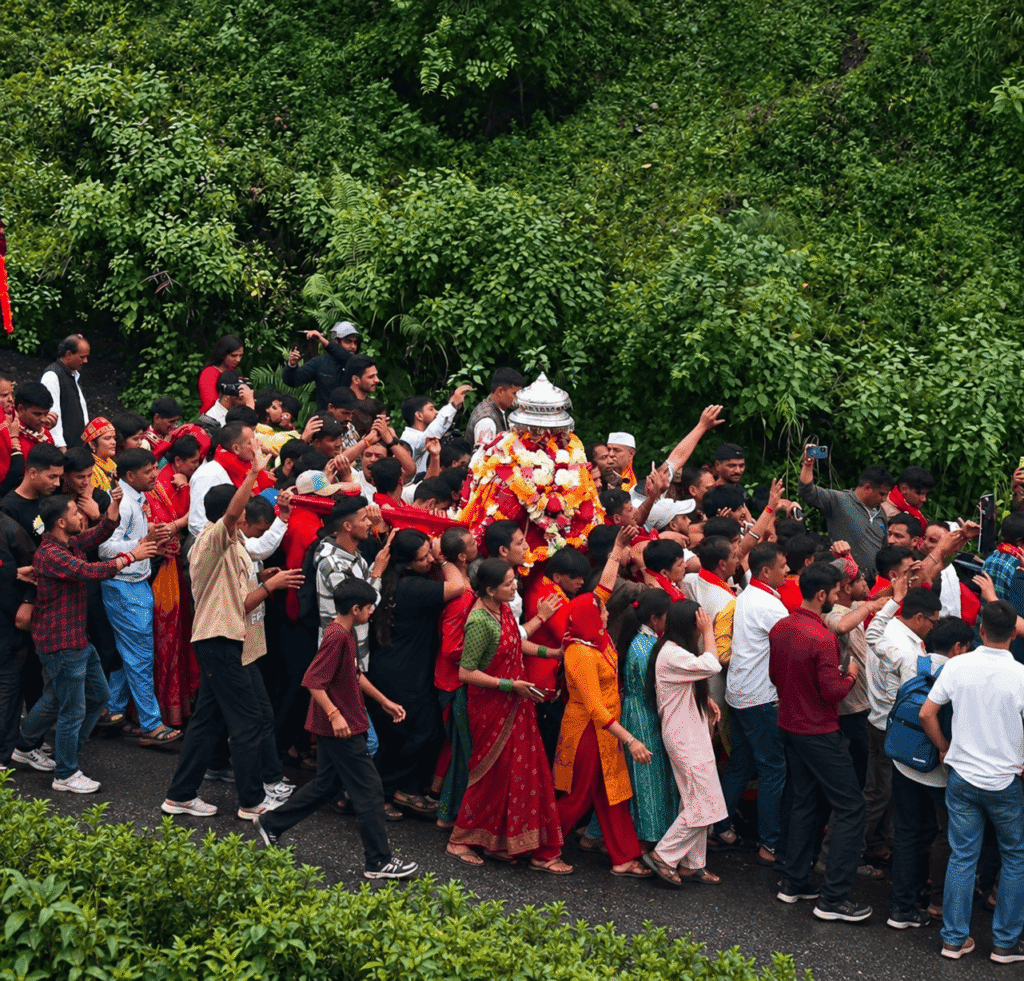
The pilgrimage traditionally begins from Nauti village, considered the in laws home of Nanda Devi. From here, thousands of devotees, priests, and villagers walk together through rugged terrain for nearly three weeks.
Key stops include lush meadows like Bedni Bugyal, dense forests, and sacred sites such as Roopkund Lake, famous for the mysterious human skeletons found there. The journey concludes at Homal Kund, where final rituals are performed amidst towering Himalayan peaks.
The route is physically demanding, often reaching altitudes above 5000 meters. Despite the challenges, participation remains strong, reflecting the unwavering faith of devotees.
Unique Rituals and Traditions
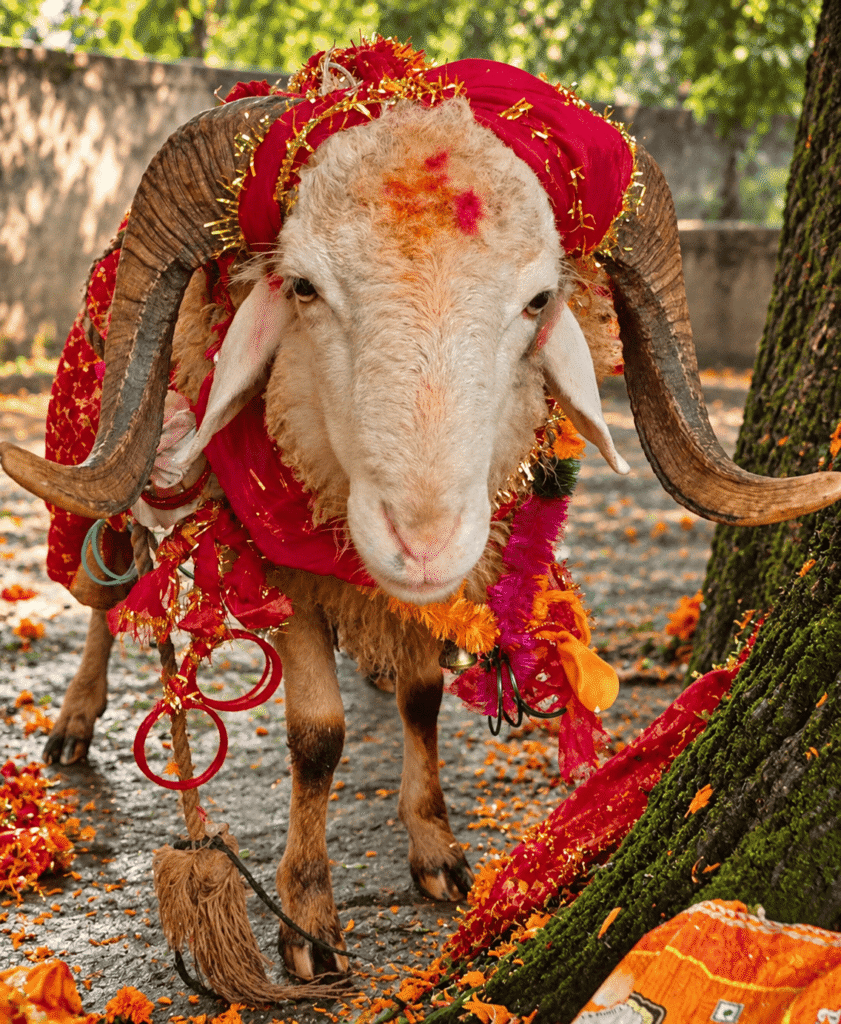
One of the most fascinating aspects of the Raj Jaat is the presence of the four horned ram, known locally as Chausinghya Khadu. This rare animal is believed to be chosen by the goddess herself and leads the procession. At the end of the journey, it is released into the high mountains, symbolizing the completion of the देवी’s journey.
Another important element is the chhatoli, a ceremonial umbrella made of ringal bamboo. It represents the presence of the goddess and is carried throughout the yatra with great reverence.
Traditional music, folk songs, and rituals accompany the entire journey, turning it into a moving cultural festival across the mountains.
Cultural and Environmental Significance
The Nanda Devi Raj Jaat is more than a religious event. It is a powerful expression of the region’s identity. Communities from different villages come together, strengthening social bonds and preserving oral traditions.
At the same time, the yatra passes through ecologically sensitive zones near the Nanda Devi National Park. This highlights the need for responsible participation. In recent years, efforts have been made to reduce environmental impact and maintain the fragile Himalayan ecosystem.
When Does It Take Place
Unlike annual pilgrimages, the Nanda Devi Raj Jaat is held roughly once every twelve years, although smaller local yatras take place more frequently. The last major Raj Jaat was held in 2014, and the next one is currently underway in 2026, from 5 September to 25 September.
Why It Still Matters Today
In a rapidly modernizing world, the Nanda Devi Raj Jaat stands as a reminder of how traditions can survive and remain meaningful. It brings together faith, endurance, and cultural pride in a way few events can.
For travelers and researchers alike, it offers a rare glimpse into a living Himalayan tradition that has not lost its essence. For the people of Uttarakhand, it remains a sacred duty and an emotional journey that continues to define their cultural landscape.
The Raj Jaat is not just walked. It is felt, remembered, and passed on from one generation to the next.