
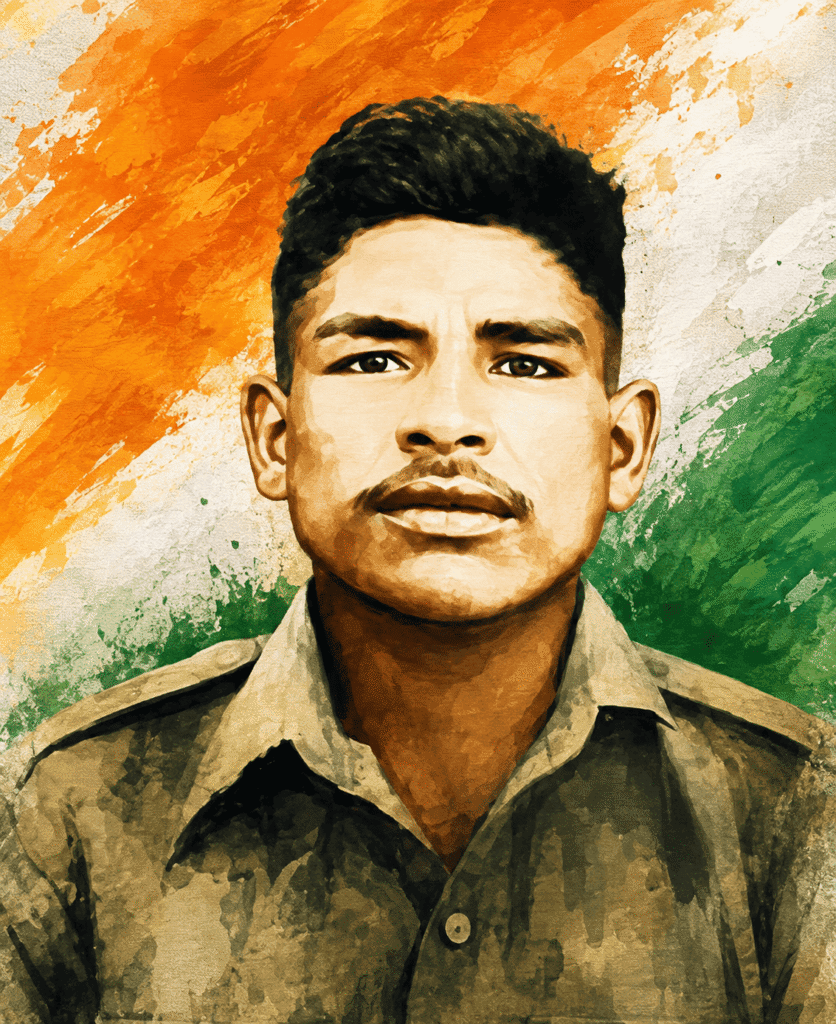
There are some stories in history that feel larger than life, yet they belong to real people who once walked among us. The story of Jaswant Singh Rawat is one of them. It is not just about a soldier or a war. It is about a young man from the hills of Uttarakhand who chose duty over fear, and in doing so, became a legend.
Early life rooted in simplicity
Jaswant Singh Rawat was born on 19 August 1941 in a small village in Pauri Garhwal, Uttarakhand.
Life in the mountains was not easy. Resources were limited, opportunities were few, but the spirit of resilience was everywhere. Growing up in such an environment shaped his character. Discipline, hard work, and a quiet sense of responsibility became part of who he was.
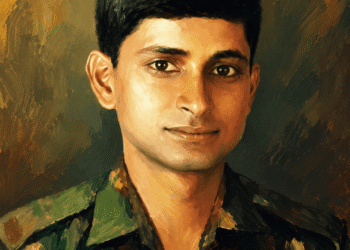
Like many young men of his region, he dreamed of serving the nation. At a young age, he joined the Indian Army and became part of the 4th Battalion of the Garhwal Rifles.
He was not a famous name then. Just another soldier in uniform, carrying hopes of his family and the pride of his land.
The war that changed everything
In 1962, India faced a sudden and harsh conflict with China. The battlefields were far from home, high in the mountains of what is now Arunachal Pradesh. Among these battles, the fight at Nuranang became one of the most intense. Jaswant Singh Rawat found himself in the middle of it.
During the Battle of Nuranang on 17 November 1962, his unit faced repeated attacks from the Chinese army. At one crucial moment, a powerful enemy machine gun position was causing heavy damage. Jaswant, along with his fellow soldiers, volunteered to silence it. Braving intense fire, they reached close enough to destroy the position and capture the weapon. It was a bold move. The kind that turns the tide of battle. But the real story had only just begun.
A stand that became legend
As the situation worsened, orders were given to withdraw. War often demands retreat to save lives. But sometimes, a single decision can change the meaning of a battle.
Jaswant Singh Rawat stayed back.
For the next 72 hours, he continued to fight, holding his ground against overwhelming odds.
According to accounts and local stories, he moved between different firing positions, creating the illusion of a larger force. With limited resources and no backup, he kept the enemy engaged far longer than expected.
Some narratives also speak of help from local Monpa girls named Sela and Nura, who supported him during those critical hours.
Whether seen as history or folklore, these details only deepen the human side of the story. In the end, Jaswant Singh Rawat made the ultimate sacrifice. His life ended on the battlefield, but his courage refused to fade.
Honour beyond life
For his extraordinary bravery, he was awarded the Maha Vir Chakra, India’s second highest gallantry award. But what makes his story truly unique is what happened after. At the place where he fought, a memorial known as Jaswant Garh stands today. Soldiers stationed there still treat him as if he is on duty. His uniform is maintained, his bed is prepared, and his presence is felt as part of the unit’s daily life.
It is rare for a soldier to be remembered this way. Not just as a name in history, but as a living symbol of courage.
Why his story still matters
Jaswant Singh Rawat was only in his early twenties when he faced one of the toughest battles of his time. He did not have superior weapons or large numbers on his side. What he had was something far more powerful, a sense of duty that did not break even in the face of certain danger. His story reminds us that bravery is not about being fearless. It is about standing firm even when fear is real.
In a world that often forgets its heroes too quickly, his name continues to live on in the mountains, in the memories of soldiers, and in the quiet pride of the land he came from.
He was not just a soldier.
He became a story that refuses to end.