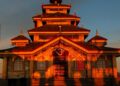

Hidden amid the lush valleys of the Tons River in western Uttarakhand lies one of the Himalayas’ most revered and historically significant temples, the Mahasu Devta Temple at Hanol. More than just a place of worship, this centuries-old shrine represents the rich cultural traditions of the Jaunsar-Bawar region, where faith, folklore, and local governance have been intertwined for generations.
Known as the abode of Mahasu Devta, a regional manifestation closely associated with Lord Shiva, the temple attracts devotees from Uttarakhand, Himachal Pradesh, and beyond. Its remarkable architecture, fascinating legends, and enduring traditions make it one of the most unique heritage temples in northern India.
Where is Mahasu Devta Temple?
Mahasu Devta Temple is located in Hanol village of Dehradun district, Uttarakhand, on the eastern bank of the Tons River. The temple lies near the Uttarakhand–Himachal Pradesh border and forms an important spiritual destination in the Jaunsar-Bawar region.
The surrounding landscape of dense forests, rolling hills, and the flowing Tons River creates a peaceful atmosphere that complements the temple’s spiritual significance.
Historical Background
Archaeological studies indicate that the temple’s original sanctum dates back to approximately the 9th–10th century CE. Over the centuries, additional structures such as the mandapa and entrance halls were added while preserving the temple’s traditional Himalayan character.
Because of its historical and architectural importance, the temple is protected as an ancient monument under the Archaeological Survey of India (ASI).
Who is Mahasu Devta?
Unlike many temples dedicated to a single deity, Mahasu Devta is worshipped in the form of four divine brothers, collectively known as the Mahasu brothers:
- Botha Mahasu
- Pavasi Mahasu
- Vasik Mahasu
- Chalda Mahasu
Local tradition regards them as protectors of the region who safeguard people from injustice and evil. Among them, Chalda Mahasu is believed to travel across villages to bless devotees, while Botha Mahasu permanently resides at Hanol.
Although Mahasu Devta is widely regarded as a local form of Lord Shiva, the worship also reflects the indigenous spiritual traditions of the western Himalayas that existed long before modern state boundaries.
The Legend Behind the Temple
According to local folklore, the Jaunsar region was once terrorized by a powerful demon named Kirmir, who destroyed villages and spread fear among the people.
A pious Brahmin named Huna Bhatt and his wife prayed for divine protection. Following divine guidance, they journeyed towards Kashmir to seek the blessings of Mahasu Devta. The four divine brothers eventually appeared, defeated the demon, restored peace to the region, and chose Hanol as their sacred seat.
The village is traditionally believed to have derived its name from Huna Bhatt, whose unwavering devotion became central to the temple’s origin story.
While historians classify this account as sacred folklore rather than verifiable history, it remains deeply rooted in the cultural identity of the region.
A Marvel of Himalayan Architecture
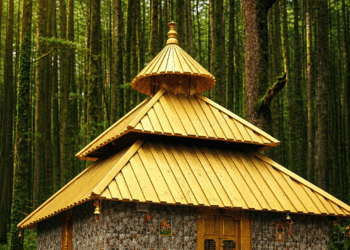
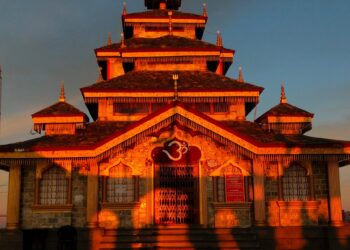
Mahasu Devta Temple is among the finest surviving examples of traditional Himalayan temple architecture.
Its construction combines:
- Stone masonry
- Deodar wood
- Intricate wooden carvings
- Sloping slate roofs
- Nagara-style sanctum
The temple also showcases the Kath-Kuni (or Koti-Banal) style, a construction technique in which alternating layers of stone and timber provide exceptional strength and flexibility. This method has historically helped buildings withstand earthquakes in the Himalayan region.
Beautiful wooden balconies, carved pillars, ornamental roofs, and decorative brackets demonstrate the craftsmanship of ancient Himalayan artisans.
Mahasu Devta: The God of Justice
Perhaps the temple’s most distinctive feature is Mahasu Devta’s long-standing reputation as the God of Justice.
For centuries, local communities have believed that disputes can be resolved by taking solemn oaths in the deity’s presence. Traditionally, individuals involved in disagreements would swear before Mahasu Devta, believing that false testimony would inevitably invite divine punishment.
This custom earned the deity immense respect throughout Jaunsar-Bawar and neighboring regions, where moral accountability became closely associated with religious faith. Although modern legal systems now govern civil matters, these traditions continue to hold cultural significance among local communities.
Festivals Celebrated at the Temple
The temple remains vibrant throughout the year, especially during traditional festivals such as:
- Jagra Festival
- Bishu Festival
- Budhi Diwali
- Paush ki Dhaal
These celebrations feature devotional rituals, traditional music, folk dances, and community gatherings that preserve the cultural heritage of Jaunsar-Bawar.
Among these, Jagra is one of the most important annual religious events, attracting thousands of devotees from Uttarakhand and Himachal Pradesh.
Best Time to Visit
The ideal months to visit Mahasu Devta Temple are:
- March to June – Pleasant weather and lush green surroundings.
- September to November – Clear skies and comfortable temperatures after the monsoon.
Winter also offers scenic beauty, though the region can become quite cold.
How to Reach
By Road
- Dehradun to Hanol: Approximately 190 km
- Chakrata to Hanol: Around 95 km
Private vehicles and local taxis operate from Dehradun, Chakrata, and Tyuni.
Nearest Railway Station
- Dehradun Railway Station
Nearest Airport
- Jolly Grant Airport, Dehradun
The final stretch to Hanol passes through picturesque mountain roads lined with forests and river valleys, making the journey itself memorable.
Nearby Attractions
Visitors often combine their temple visit with nearby destinations including:
- Chakrata
- Tiger Falls
- Kanasar Forest
- Tons River Valley
- Mori Valley
- Lakhamandal Temple
Together, these places offer a blend of spirituality, adventure, history, and natural beauty.
Conclusion
Mahasu Devta Temple is far more than an ancient shrine. It represents centuries of Himalayan faith, indigenous traditions, and architectural excellence. Whether one visits as a pilgrim, a history enthusiast, or a traveler seeking the hidden gems of Uttarakhand, Hanol leaves a lasting impression through its serene surroundings, remarkable craftsmanship, and enduring cultural legacy.
Standing beside the flowing Tons River for nearly a thousand years, the Mahasu Devta Temple continues to symbolize justice, devotion, and the timeless heritage of the western Himalayas.